Garage Floor Epoxy · Oceanside

Garage Floor Epoxy in Oceanside, CA

We grind the slab, build four coats of resin, and seal it under polyaspartic so your cars roll back on within a day.

1 day installs · typical timeline
Free Quote

Free Garage Floor Epoxy quote.

We reply within 1 business hour. No spam, ever.

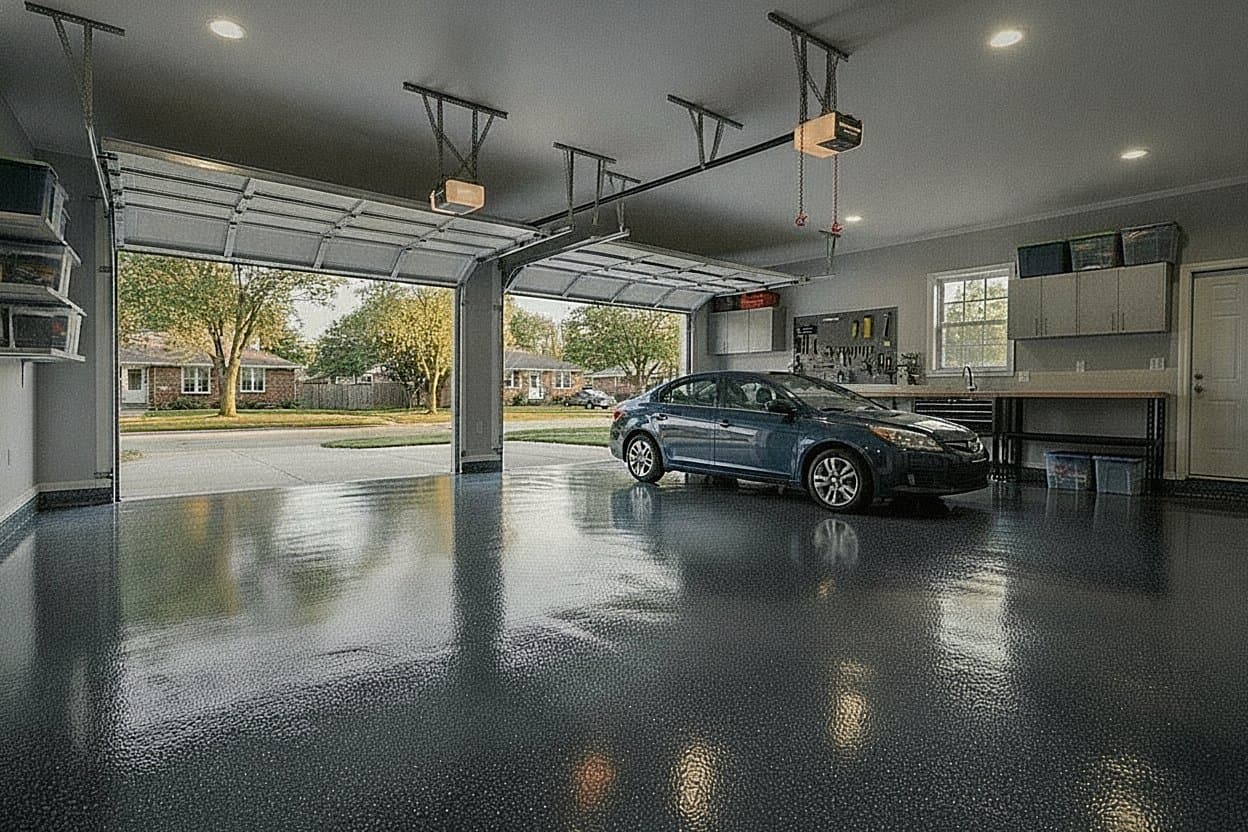
Garage floor with full flake epoxy coating.
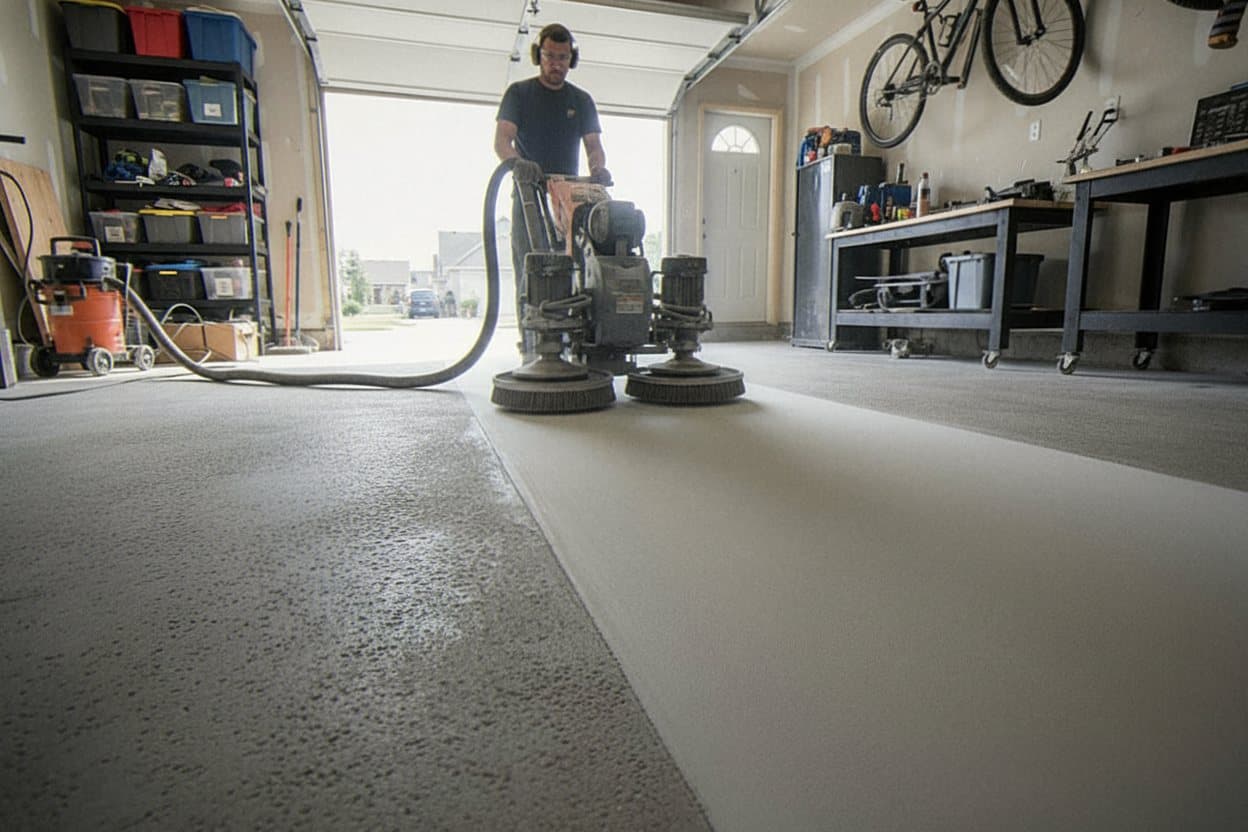
Diamond grinder opening bare garage concrete.
Epoxy base coat rolling across a garage slab.
What we install

What goes into a garage floor that lasts near the coast

Most garage slabs in Oceanside look fine until you really study them. Hairline cracks run from the door. Oil shadows sit near where the engine parks. A fine coat of beach sand and brake dust grinds into the surface every time you pull in. We start by reading the slab, not by rolling on paint. Our crew grinds the concrete open with a planetary diamond head until the pores breathe again. That profile is what lets resin bite and stay put for years.

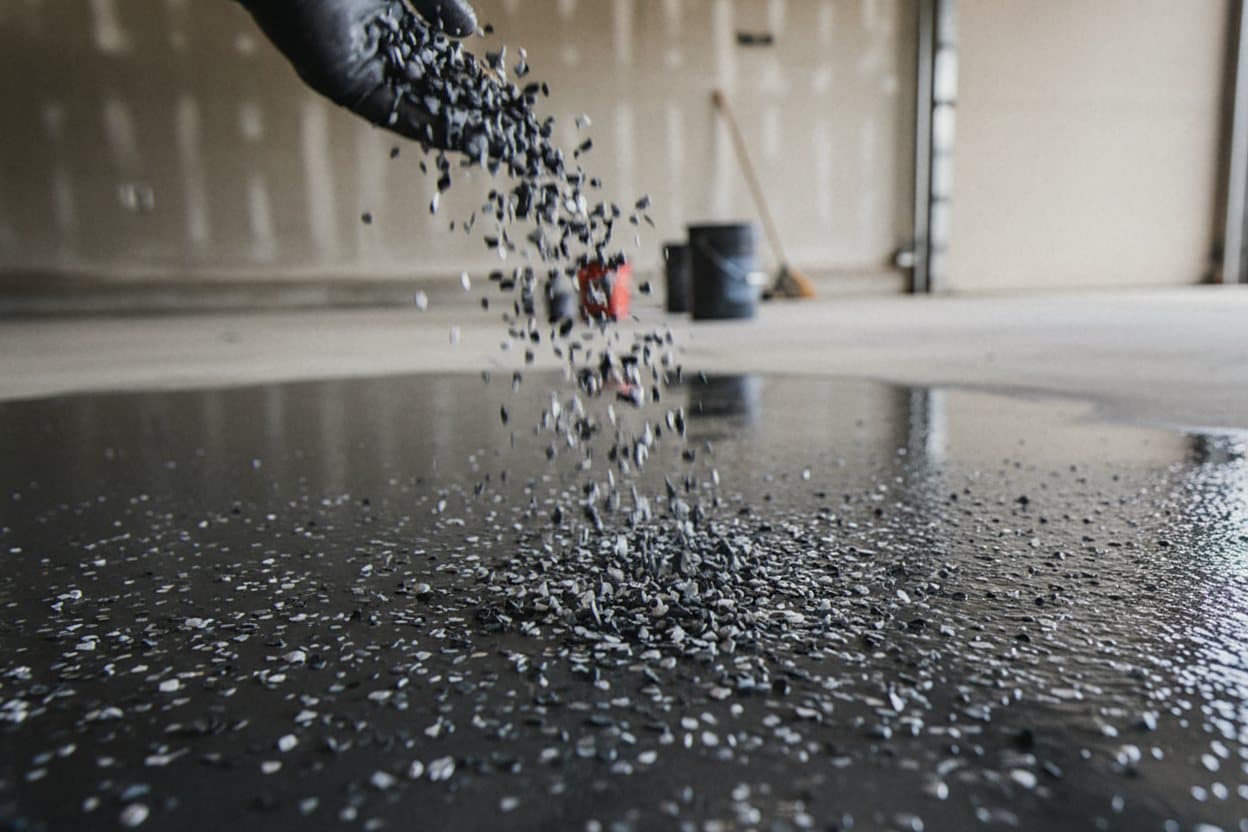
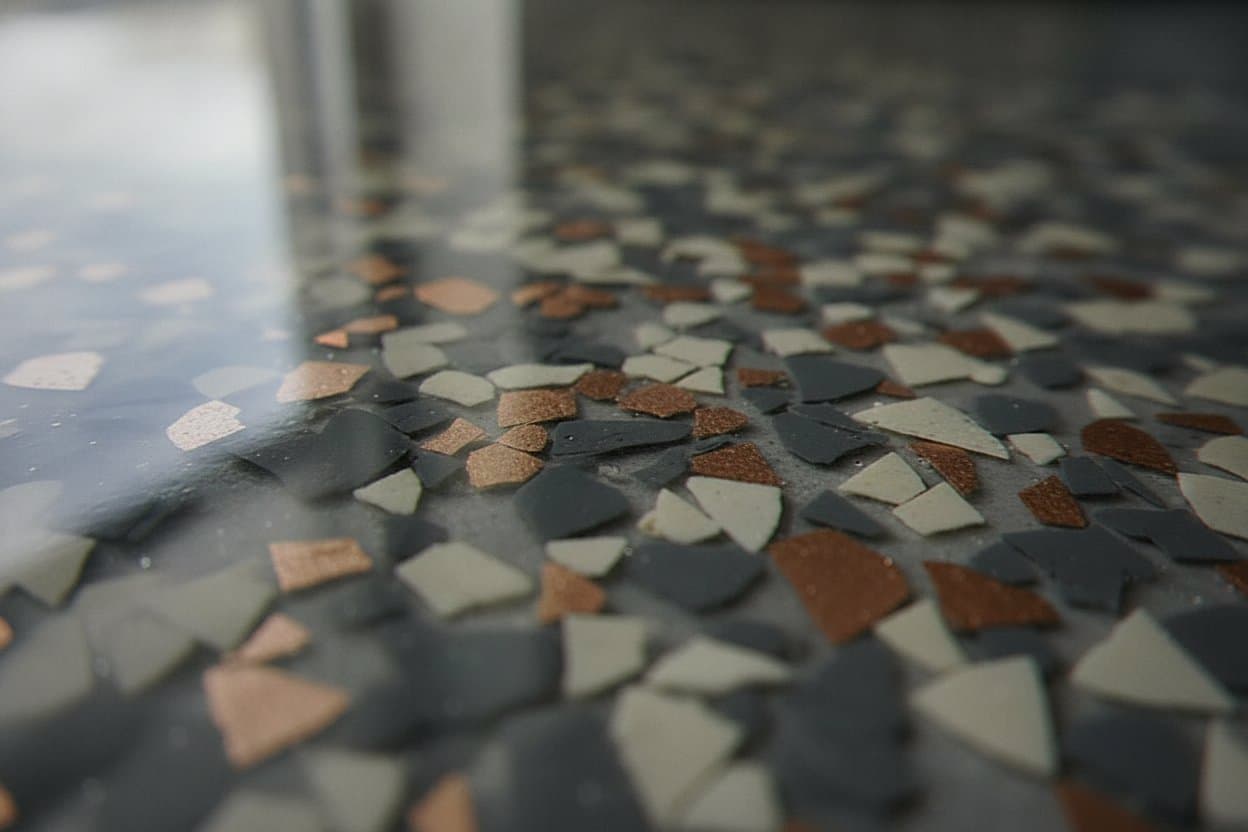
After the grind we fill the cracks and chase down every soft spot. Then the coats go on in order. A primer soaks into the open concrete and grabs hold. A pigmented base coat brings the color you picked. We broadcast vinyl flake into that wet base by hand until the floor reads even. The last coat is a clear polyaspartic that takes the abuse and shrugs off the sun that pours through an open garage door on a warm Oceanside afternoon.

  • A double garage wraps in one working day. Walk on it that evening.
  • Cars roll back onto the slab about a day after the topcoat goes down.
  • Flake texture adds grip when wet feet and damp tires track in marine layer moisture.
  • The floor holds up to motor oil, brake fluid, gear oil, and the odd coolant spill.
  • All of the work happens indoors, so we manage cure temperature even on a foggy coastal morning.
The slab is rarely the problem. The coating spec was.

Heat is the real test for a garage floor down here. Tires warm up on the drive home, and a cheap coating peels right where the rubber sits. That failure has a name. Crews call it hot tire pickup. A true polyaspartic topcoat over a ground slab holds against it, so the floor stays put under the car instead of lifting in patches. The marine layer brings its own twist. Damp mornings can stall a cure if the installer ignores them, so we track slab moisture and air humidity before a single coat goes down.

If you want a garage floor in Oceanside that still looks sharp after a few summers of sun, sand, and salt air, call us and tell us about your slab. We will walk you through the grind, the flake colors, and the day your cars come back.
Materials

Why each of the four coats earns its place

People think epoxy is one bucket you roll out on a Saturday. A floor that survives daily driving is built in layers, and each one does a job the others cannot. Skip a layer to save a few hours and the whole system gets weaker. We build all four every time, because the coast is hard on shortcuts.

The order matters as much as the count. Primer has to cure before base. Flake has to land in wet resin, not on a dry floor. The polyaspartic top can only go down once the broadcast coat is ready for it. We time each pass so the layers fuse into one slab instead of stacking like loose paint that can lift later.

  • Primer soaks into the open concrete and anchors the whole system.
  • Flake locks into wet resin by gravity, not glue.
  • Polyaspartic topcoat takes the sun, hot rubber, and gear oil.
  • Four coats over a profiled slab: prime, base, broadcast, topcoat.
Cured flake floor detail under clear polyaspartic.
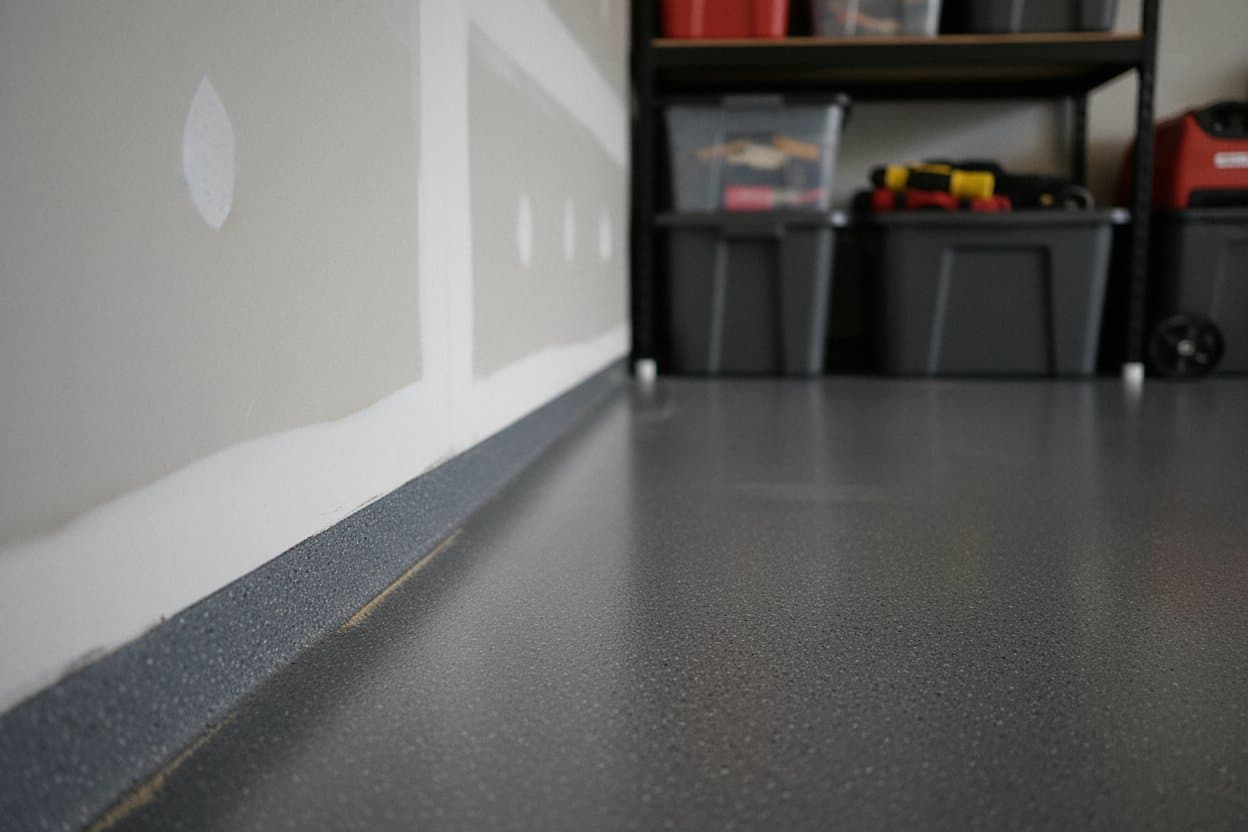
Coved edge where garage floor meets the wall.
What about the alternatives?

Other ways people try to refresh a garage slab

We get asked about every shortcut on the market. Here is how the common ones hold up in a working Oceanside garage, and where each one falls short.

Latex porch paint

It rolls on fast and looks fine for a season. Then hot tires grab it, sand scratches it, and it flakes off in sheets by the next summer.

Skip

Interlocking PVC tiles

They snap down over a rough slab with no grinding. Grit and water work under the seams over time, and they shift when you turn the wheel hard.

Acceptable

Penetrating concrete sealer

A sealer darkens the slab and slows stains without much prep. It does nothing for looks or grip, and tires still mark a bare floor.

Acceptable

Store kit DIY epoxy

The boxed kits use thin resin and a token bag of flake. With no real grind under them, they lift at the tire line within a year or two.

Skip

Full epoxy and polyaspartic install

A ground slab, four fused coats, and a tough clear top. It takes the heat, the sand, and the salt air, and it stays down under the car.

Recommended
How it goes

From quote to walk-on, fast.

01

Your inquiry

Call or send the short form with what is going on at your place. A sentence or two is plenty for the first step.

02

We talk it through

We go over the situation on the phone, ask the questions that matter, and tell you what we would do next.

03

A clear plan

You get a plain-language rundown of the work, the order it happens in, and what to expect on the day.

04

The work gets done

Our crew shows up when we said, does the job, and walks you through the result before leaving.

Before you book

Questions worth asking the installer before signing

Anyone can roll resin on a floor. The difference shows up a year later, at the tire line and the cracks. These are the questions that tell you who actually preps a slab.

What method are you using to open the slab?
We grind with a planetary diamond machine until the concrete shows an open profile. Acid washing and a quick scuff do not cut it. If a crew skips the grind, the coating has nothing to grab, and that is the floor you see peeling in a year.
How are you treating the existing cracks?
We chase each crack open, clean it out, and fill it with a structural patch before any coat goes down. A crack left under fresh resin telegraphs right back through the finish. On a coastal slab that moves with moisture, that step is not optional.
Will it actually take hot tire contact?
This is the one most kits fail. A real polyaspartic top is built to hold against warm rubber, so the floor does not lift where the car parks. Ask to see a floor the crew finished a couple of summers back and look hard at the tire line.
What does the color and flake selection look like?
You pick the base color and the flake blend, and we broadcast it by hand so the spread reads even wall to wall. Want a light coastal gray or a darker charcoal that hides dust? We mix the flake to match, then lock it under the clear top.
When can the cars come back?
A typical double garage wraps in a single working day. You can walk on it that evening, and the cars roll back about a day after the topcoat goes down. We give you the exact return time before we start so you can plan around it.
Aftercare

Living with the floor over the next decade

A finished epoxy floor asks for almost nothing, which is the whole point. Sand and dust wipe up instead of grinding in. Oil sits on top instead of staining through. A few easy habits keep the gloss looking new long after the install crew packs up, even with the salt air working on everything else in the garage.

  • Sweep or dust mop the grit out every week so beach sand cannot dull the clear top.
  • Wipe oil, brake fluid, and coolant when you see them, though the coating gives you time.
  • Rinse with a damp mop and plain water for the deeper cleans, no harsh stripper needed.
  • Drop a mat under a project area if you plan to grind, weld, or drag sharp steel.
  • Call us for a fresh clear coat down the road if daily driving ever wears the shine.
Epoxy floor edge along a warehouse wall.
FAQ

What Oceanside homeowners ask about garage epoxy

What separates epoxy from polyaspartic, in practice?
Epoxy lays down the thick, hard base that grips a clean slab. Polyaspartic is different. It cures fast and holds its color under the strong coastal sun, which is why we so often pour an epoxy base first and then finish the floor with a polyaspartic top coat. That mix gives you a tough floor that still looks sharp years later.
How are coating jobs typically priced in this market?
Cost comes down to a few simple things. We look at the square footage, the shape your slab is in, and the system you pick. Prep is the big swing. A floor that needs grinding, crack repair, or patching takes far more work than a clean one. We walk the space, talk through your options, and put a clear number in front of you before any work starts.
Can you install epoxy flooring year-round in Oceanside?
Yes. Oceanside stays mild all year, so we coat floors in every season without the freeze worries that colder regions face. We do watch the marine layer and the damp mornings, since any coating needs a dry slab to bond. Our crew checks the moisture and the humidity before we open a single kit. That care lets the epoxy flooring set the way it should.
Will the floor pick up or stain under hot tires?
Hot tires can lift a weak coating. That is a prep and product issue. We grind the slab, build a real bond, and finish the floor with a top coat that is made to take the heat from your tires. A floor done this way shrugs off hot tires and the usual oil or fuel drips. Wipe up spills and it stays clean.
Ready when you are

Let's make your next steps easier

Tell us what is going on at your Oceanside home and we will walk you through the options. One call or one short form is all it takes.

Call (442) 264-1078Make your inquiry
CallContact us