
Why a coating fails, and what the slab is telling you
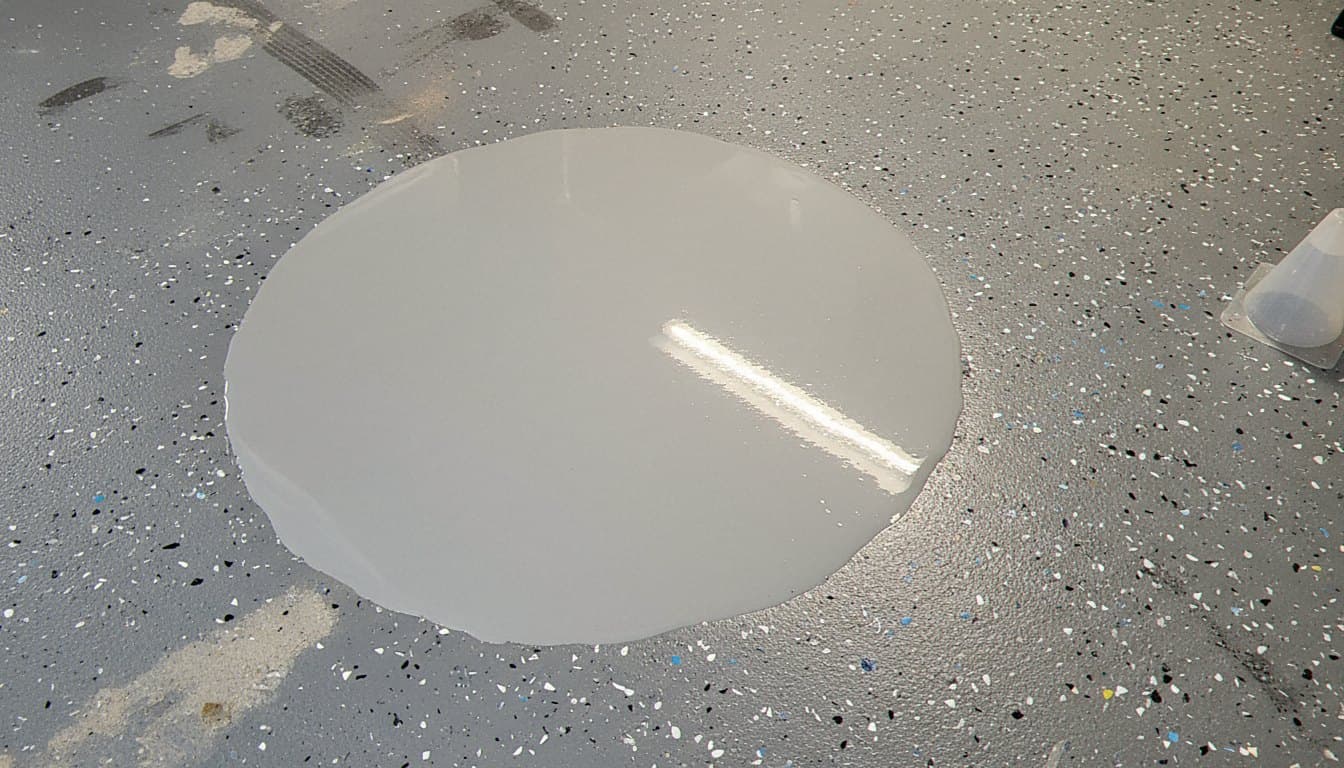
Most failed floors we see in Oceanside were never stuck to the concrete in the first place. A big box kit or a quick paint job sits on top of the slab. It does not grip. Coastal air off the harbor stays damp for most of the year, and the salt riding in that marine layer is hard on a floor that was already weak to begin with. That moisture pushes up through the concrete from below. When the grip is weak, the coating has nowhere to go but up and off. You get peeling at the edges first. Then bubbles. Then whole flakes that lift under a tire when you back out. By the time you call us, the floor is often half gone. The good news is that the slab under it is usually fine.
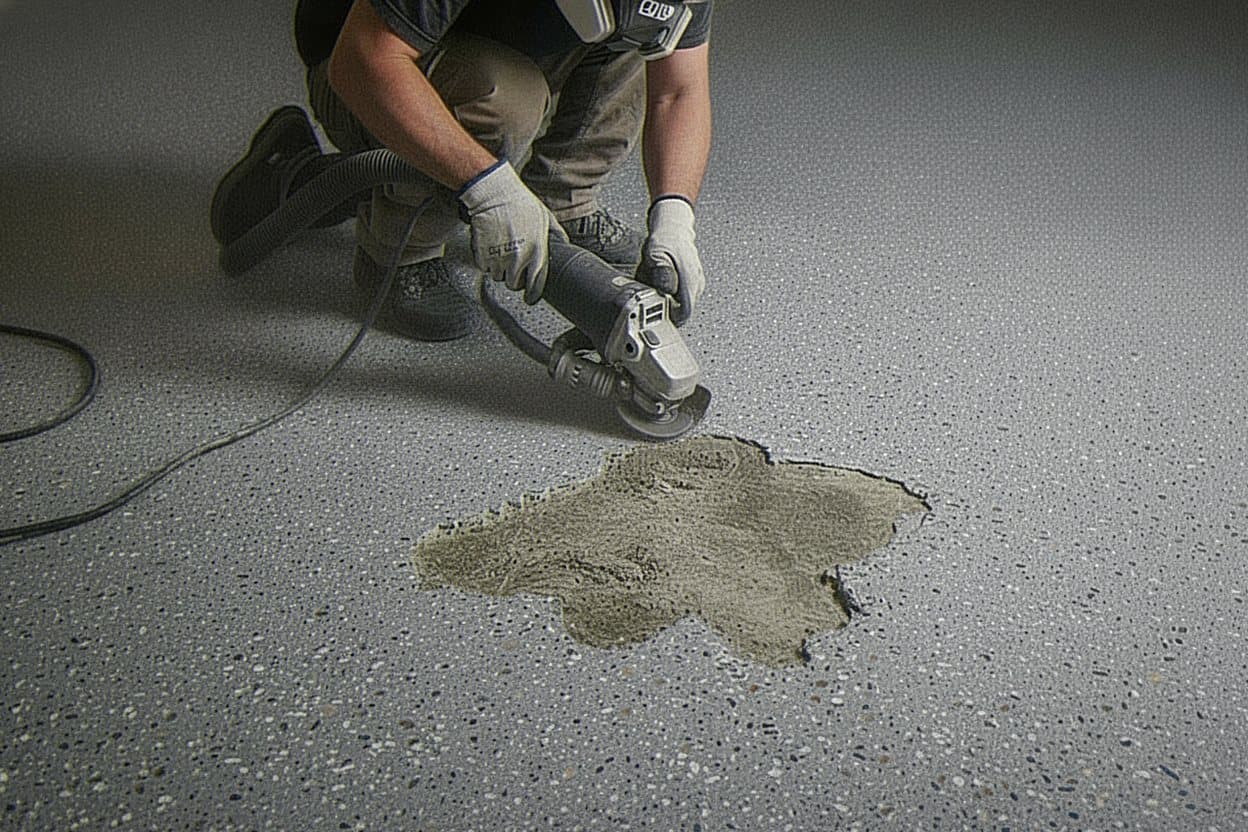
We start every repair by reading the floor in person. Our crew grinds a small spot to see how deep the trouble runs. Sometimes the old coating peels off clean and the bare slab below is solid and ready. Other times the failed layer pulled bits of concrete up with it. Those spots need patching before anything new goes down. The grind tells us which floor we are working with. It also shows us how the slab takes a fresh profile and how thirsty the concrete is. We use what we learn to quote the real job in front of us. You get a number that fits the slab in your garage, not a guess made from the curb.
- We grind a test spot on site. The price then follows what the slab actually shows, not a hunch made from the doorway.
- We open and fill every crack before the new coating goes on, so the old lines do not read back through the fresh floor a year later.
- We patch slab zones where the old coating tore concrete up with it.
- The reinstall uses the same prep and the same coats as a brand new floor, so you are not paying for a thin layer rolled over old failure that will only let go again.
- On a partial job we match the flake blend and color close, so the repair sits in with the floor you keep.
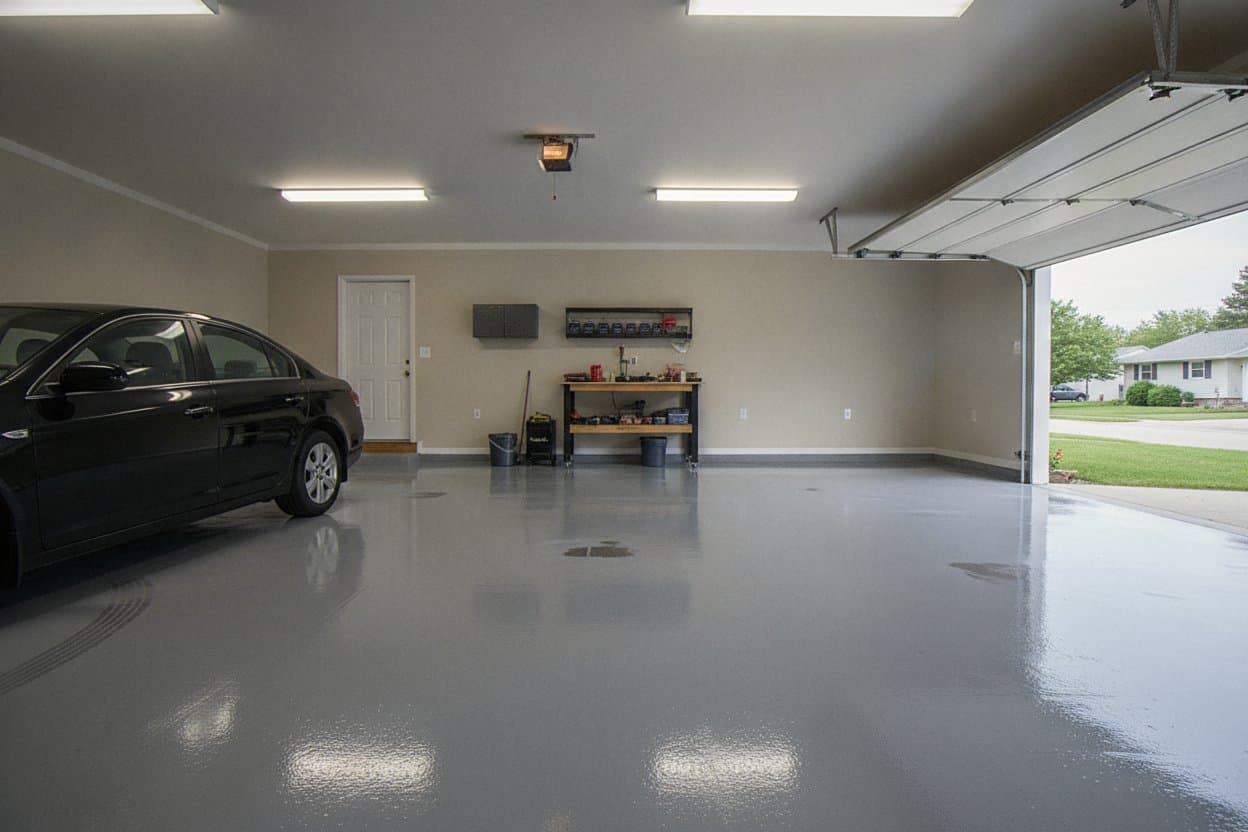
A recoat is only as strong as the prep under it. If we just rolled fresh epoxy over a floor that already let go, it would fail again the same way within a season. So we do the slow part. We take the bad coating all the way down to bare, sound concrete. We chase and fill the cracks. We patch the soft spots. Then we build the new floor up in full coats, the same way we would on a slab that never had a coating at all. It costs more time than a paint job, and we are upfront about that. It is also the only way the new floor stays put through years of hot tires and damp coastal air. That is the trade we will always make.
If your garage floor is peeling, bubbling, or lifting under your tires, give us a call. We will come out, grind a test spot, and tell you straight what your slab needs. No script, no runaround, no pressure to sign. Just a clear read on the floor and a plan to make it right.